
How Water Play Builds Childhood Development
June 8, 2026
Big Feelings at Drop-Off: Helping Your Toddler Settle Into Child Care
August 5, 2026
Keeping Your Littlest Ones Cool, Nourished, and Protected
Summer in Pittsburgh means backyard time, outdoor walks, splash pads, and long afternoons outside. For children ages 0 to 3, all of that is good for development. But the same season that invites outdoor fun can also stress young bodies.
Did you know babies and toddlers heat up faster than adults? They sunburn more easily. And they can slip toward dehydration before a parent even notices. Those are cautions, not panics. The good news is, there are handful of simple, everyday ways to handle the risk.
There are three main ideas to keep in mind for summer safety: keeping your child hydrated and nourished in the heat, protecting his or her skin from the sun, and recognizing when a warm afternoon has tipped into something worth watching. Let’s take a look.
Why Summer Asks More of a Little Body (Ages 0–3)
Young children are not just small adults. Their bodies heat up faster, sunburn more easily, and lose fluid sooner. That’s because they can’t yet sweat or regulate temperature the way older kids and grown-ups can.
According to the American Academy of Pediatrics (AAP), young children have not fully developed the ability to sweat and manage their body temperature, so they can overheat and become dehydrated far more quickly than adults. That’s why starting a few summer safety habits is a good idea. As the AAP notes in its guidance on extreme heat and children, the three areas below are where a little attention goes a long way.
How Much Water Does a Baby or Toddler Need in the Heat?
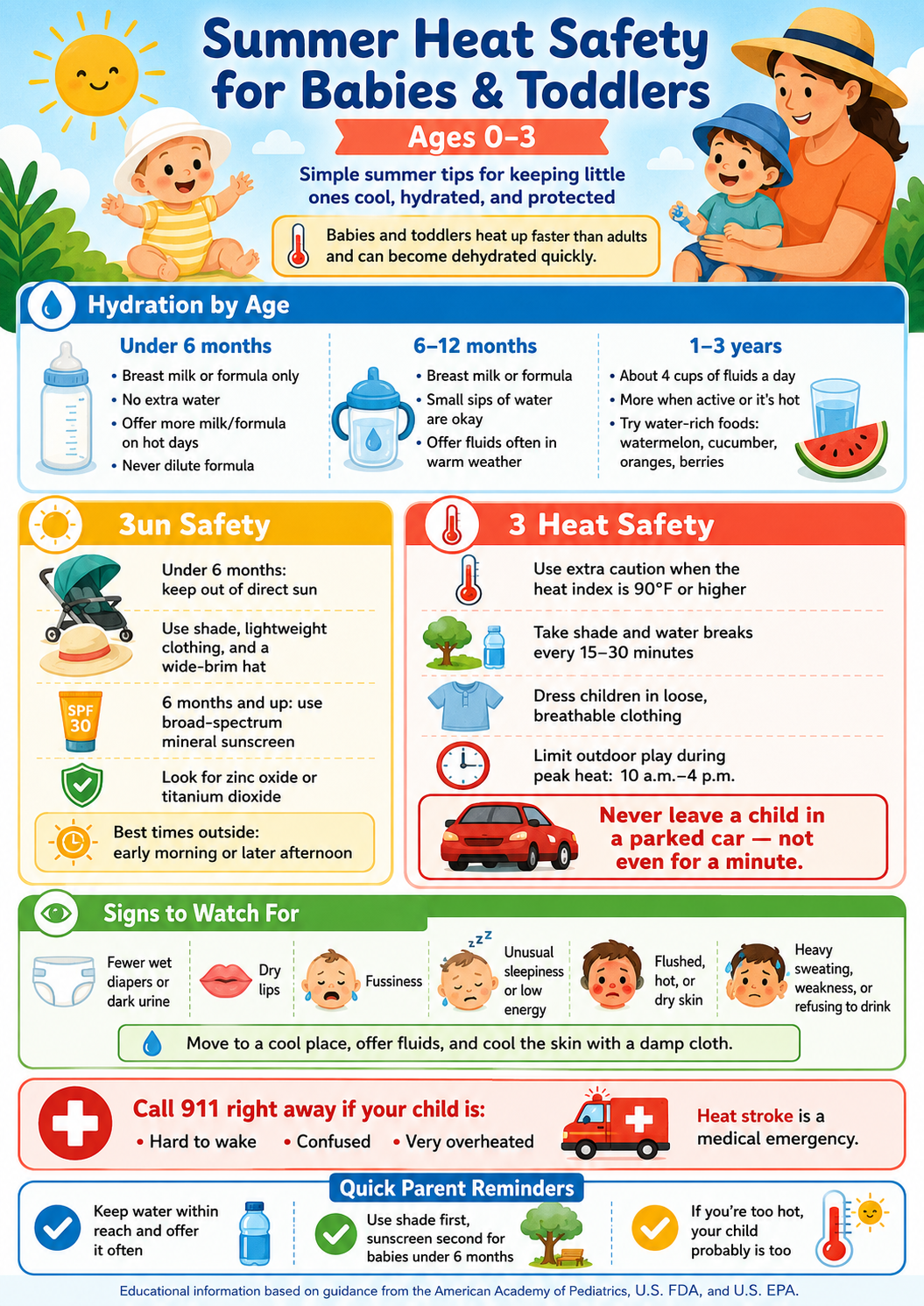
It depends on age. Babies under six months need only breast milk or formula (no extra water). Around six months, small sips of water can be introduced. And children ages one to three need roughly four cups of fluids a day, more when it’s hot or they’re active.
Here’s why the under-six-months rule matters: giving a young baby plain water can actually be dangerous, throwing off the balance of nutrients his or her body needs. On hot days, a breastfed or formula-fed baby who seems thirsty can simply be offered more breast milk or formula. One more safety note: always mix formula exactly as directed. Never dilute it to stretch a supply, since watered-down formula can make a baby seriously ill. The AAP’s guidance on healthy hydration walks through these age-by-age needs in more detail.
For toddlers, water-rich foods make hydration easy and even fun. Watermelon, cucumber, oranges, and berries all count toward the day’s fluids.
What you can do: Keep water within reach and offer it often, before your child even asks. Serve water-rich snacks on hot afternoons. And if you’re breast- or bottle-feeding, plan for a little extra on especially warm days.
When Can Babies Wear Sunscreen, and What Kind Is Safe?
For babies under six months, the safest approach is to keep them out of direct sun altogether. Plan on shade, lightweight clothing that covers arms and legs, and a wide-brimmed hat. For babies six months and older, a broad-spectrum, mineral-based sunscreen (look for zinc oxide or titanium dioxide) is the way to go.
Why the age line? A young baby’s skin is thin and still developing, and sunscreen ingredients are more likely to irritate it. The FDA agrees that the best protection for infants under six months is shade and clothing, not sunscreen. When shade just isn’t available, a small amount of sunscreen on exposed areas like the face and the backs of the hands is okay, but go for the cover-ups first.
Sun habits formed early pay off for life. A blistering sunburn in childhood can raise the long-term risk of skin cancer, which is exactly why gentle, consistent sun protection is worth the effort.
What you can do: Time outings for early morning or later afternoon, when the sun is less intense. Reach for a stroller canopy, a sun hat, and a light long-sleeve layer first. For your six-month-old and up, apply a mineral sunscreen about 15 minutes before heading out, and reapply after water play or sweating.
What Temperature Is Too Hot for a Young Child to Play Outside?
As a general rule, use extra caution once the heat index reaches 90°F or higher. The heat index blends temperature and humidity into how hot it actually feels. At the ninety degree level, the AAP advises limiting prolonged time outdoors, especially for babies and young children.
A young child’s body simply can’t shed heat efficiently yet, so overheating can sneak up fast. The single most important rule: never leave a child in a parked car, not even for a minute. On a warm day, the inside of a car can climb to dangerous temperatures within minutes.
What you can do: Aim outdoor play for the cooler mornings and evenings. Dress your child in loose, breathable fabrics. Take regular shade and water breaks (every 15 to 30 minutes on hot days) and head indoors when the heat index climbs. When in doubt, trust your own comfort: if you’re too hot, your child almost certainly is too.
Your Age-by-Age Summer Quick Guide
Things to Watch For
Most of summer is pure joy. But now and then, heat or low fluids can show up in small, observable ways. Think of these as gentle prompts to check in, not causes for panic:
- Fewer wet diapers than usual, or unusually dark urine
- Fussiness, or unusual sleepiness and low energy
- Flushed, hot, or dry skin
- Signs of heat exhaustion, such as heavy sweating, weakness, or refusing to drink
If you notice these, the first steps are simple: move your child to a cool place, offer fluids, and cool the skin with a damp cloth. Call your pediatrician whenever something feels off. And know the emergency line: heat stroke—marked by a very high body temperature, confusion, or a child who is hard to wake—is a medical emergency. Call 911.
Frequently Asked Questions
Can I give my baby water in hot weather?
For babies under six months, no—breast milk or formula provides all the fluid your baby needs, even on hot days. Giving extra water to a young infant can be dangerous. If your baby seems thirsty, offer more breast milk or formula. Around six months, small amounts of water can be introduced.
How much water should a toddler drink in summer?
Children ages one to three need about four cups of fluids a day, and more when it’s hot or they’re active. Water-rich foods like watermelon and cucumber count, too. Offer drinks often, before your child asks.
Is it safe to put sunscreen on a baby under 6 months?
Usually not. The AAP and FDA recommend keeping infants under six months out of direct sun and relying on shade and clothing instead. When shade truly isn’t available, a small amount of sunscreen on exposed skin is acceptable—but cover-ups come first.
What sunscreen is safest for a 1-year-old?
Choose a broad-spectrum, mineral-based sunscreen with zinc oxide or titanium dioxide. These sit on top of the skin and are gentler on sensitive little bodies than many chemical formulas. Apply about 15 minutes before going out and reapply after water or sweat.
What are the signs of dehydration in a baby or toddler?
Watch for fewer wet diapers than usual, unusually dark urine, dry lips, fussiness, or unusual sleepiness. Move your child to a cool spot and offer fluids, and call your pediatrician if you’re concerned.
Is it ever okay to dilute formula to keep my baby hydrated in the heat?
No. Always mix formula exactly as directed. Watering it down can dangerously dilute the nutrients and salts your baby needs and can make him or her seriously ill. On hot days, offer more properly mixed formula or breast milk instead.
Early Intervention Therapies
Trust your instincts. You know your child best. If something about your child’s development ever feels off, there’s never any harm in asking questions.
Consider reaching out to your pediatrician or early intervention team if you notice noticeable delays in motor skills such as sitting, crawling, or walking; few words, sounds, or gestures compared with what’s typical for your child’s age; or a loss of skills he or she had already gained. Early support makes a real difference, and getting answers brings peace of mind.
If you have questions about your child’s development, TEIS Early Intervention can help. Our specialists listen to your concerns, assess your child’s individual needs, develop a customized treatment plan, and coach you through simple, routine-based solutions to help your child thrive.
“Our therapists helped us advocate for our child. They communicated with us and her doctors so well. They find ways to make therapy fun and exciting.” — Rachel S., TEIS parent
Call us at 412-271-8347 or ask your pediatrician about getting an Early Intervention evaluation.
Early intervention evaluations and therapy services are available under the Federal Early Intervention Program for Infants and Toddlers with Disabilities. Before services can begin, an independent evaluation of your child must be completed. To ensure impartiality, one agency provides evaluation services while another offers therapeutic services.
To schedule an evaluation, call 1-800-692-7288 or email help@connectpa.net.
 Send to a friend!