
Spring Into Development: How Outdoor Play Supports Your Child’s Growth From Birth to Age 3
April 7, 2026
How Water Play Builds Childhood Development
June 8, 2026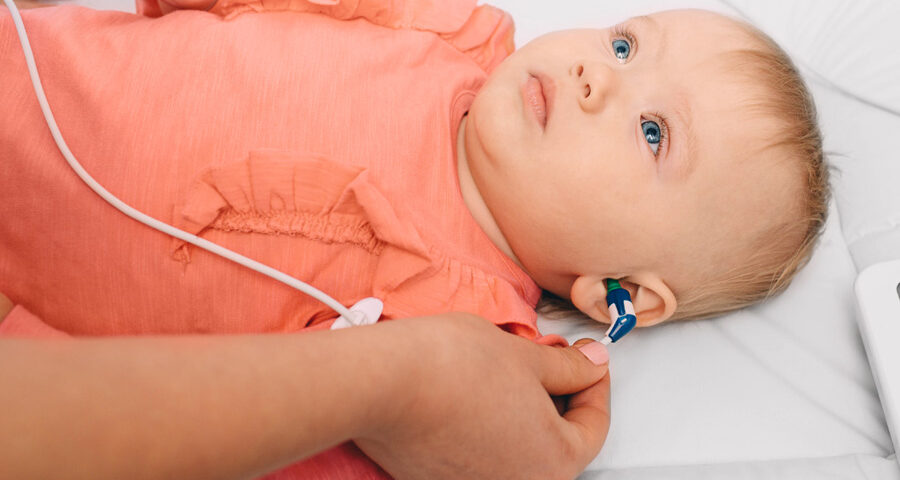
Early Signs of Hearing Concerns and Why They Matter
May is National Speech-Language-Hearing Month That makes it a good time to take a look at childhood hearing, which often gets overlooked.
Most newborns in the United States have their hearing screened before they leave the hospital. If your baby passed that test, it is natural to assume their hearing isn’t something to worry about. And in most cases, you’re right.
But hearing can change over time. And while no parent wants to think of childhood hearing loss, it does happen. One of the most common ways it happens is through fluid buildup from ear infections, and those come and go throughout the early years.
Unfortunately, children are not well-equipped to tell you about a change in their hearing. Worse, hearing is an essential sense that babies and toddlers use to form language skills.
For children ages 0 to 3, even mild or temporary hearing issues can quietly delay the speech, language, and social skills. The good news is that you can learn to spot concerns early, and early intervention makes a real difference.
Why Hearing Matters for Early Development
Speech and language don’t happen in a vacuum. They’re built, sound by sound, on what your child hears every day. That includes the conversations you have together, but it also includes a huge amount of incidental listening: overhearing conversations, picking up rhythms from a song on the radio, hearing character dialog on TV, and listening to parents read to them at bedtime.
This kind of background language exposure is how children build vocabulary and learn how words fit together. When hearing is reduced, even mildly, that learning slows down.
According to the CDC’s Early Hearing Detection and Intervention (EHDI) program, children who are identified with hearing loss by 3 months and start receiving services by 6 months have a much better chance of developing language skills close to expected milestones. This is sometimes called the 1-3-6 benchmark: screening by 1 month, diagnosis by 3 months, intervention by 6 months.
The first three years are also when the brain is most actively wiring itself for language. That is why catching hearing concerns early (even small ones) matters so much.
The Two Types of Hearing Loss in Young Children
Not all hearing loss looks the same, and the difference matters for parents.
Sensorineural hearing loss is permanent hearing loss caused by issues in the inner ear or auditory nerve. It is typically present at birth and is what newborn screening is designed to catch. (About 98 percent of babies in the U.S. now have their hearing screened, according to the National Institute on Deafness and Other Communication Disorders). When this kind of hearing loss is identified early, families can connect quickly with audiologists and start exploring options like hearing aids, cochlear implants, or visual communication approaches.
Conductive hearing loss is different. This is hearing loss caused by something blocking sound from getting to the inner ear. For children, this is most often fluid behind the eardrum from ear infections. Unlike sensorineural loss, conductive loss often comes and goes. A child might hear fine one week and have muffled hearing the next, when fluid builds up from a cold for example.
Conductive loss usually doesn’t show up on newborn screening, because it develops later. It’s also a leading reason kids end up on a speech therapist’s caseload, because every episode of fluid buildup is a stretch of time when your child is hearing a softer, less clear version of the world.
Hearing Milestones from Birth to Age 3
Just like there are milestones for crawling, walking, and talking, there are milestones for hearing and listening. Keeping in mind that every child develops at their own pace, presented below are general guidelines based on ASHA’s communication milestones.
Birth to 3 Months
Your baby should startle to loud sounds, quiet down or smile when you talk, and start making cooing sounds. By around 3 months, they should turn or look toward voices.
What to watch for: A baby who doesn’t react to sudden loud sounds, or doesn’t seem to recognize your voice.
4 to 6 Months
Babies at this age laugh, react to toys with bells or music, and start playing with vowel sounds, like long strings of “aaaah” and “oooo.” They also start vocalizing back when you talk to them.
What to watch for: A baby who isn’t making sounds back at you, or who doesn’t seem interested in sounds in his or her environment.
7 to 12 Months
This is when babies start responding to their own name, babbling long strings of consonants like “mamamama,” and following simple words like “bye-bye.” By 12 months, most are saying a word or two—usually “mama” or “dada.”
What to watch for: A baby who doesn’t turn when called by name, doesn’t babble much, or doesn’t respond to familiar words.
13 to 24 Months
Toddlers in this age range are growing their vocabulary fast. By 18 months, most can follow simple directions like “Get the ball” and point to body parts when asked. By age 2, they’re stringing words together and have at least 50 words they use regularly.
What to watch for: A toddler who doesn’t follow simple directions, has a much smaller vocabulary than expected, or whose speech is unusually loud or quiet.
2 to 3 Years
By age 3, most children are using two- and three-word phrases, asking questions, and can be understood (mostly) by familiar adults. Their speech may not be perfectly clear, but they communicate effectively.
What to watch for: A child who needs the TV volume turned up high, often says “What?” or “Huh?”, or whose speech is significantly behind peers.
If you suspect a problem, it’s time to have a conversation with your child’s pediatrician. A few other signs you can look for include:
- Frequent ear infections, which can cause fluctuating hearing during the most important window for language development
- Speech that’s slower to develop than other areas, or unusually unclear for his or her age
- Pulls or rubs ears often, especially when sick
Keep in mind that hearing concerns are easy to miss because young children adapt quickly. They may rely more on visual cues, watch faces intently, or learn to follow routines without needing to hear the words. That kind of adaptation can mask a problem that is still affecting language learning.
The Ear Infection Connection
Let’s take a closer look at ear infections, because they’re so common and so often dismissed as just a normal part of childhood.
Many children get ear infections, but chronic ear infections, or fluid that lingers behind the eardrum even after the infection clears, can cause weeks or months of reduced hearing. When that happens during the toddler years, kids can fall behind on speech and language without anyone realizing what’s going on.
If your child has had several ear infections, especially within a short period, talk to your pediatrician about whether a hearing check is a good idea. A simple test can rule out any problems. If help is needed, treatment options range from monitoring to medication to a small procedure that helps drain the fluid.
When to Seek Support
Trust yourself. You spend more time with your child than anyone else, and you’ll notice things that don’t show up at a 15-minute checkup. If something feels off about your child’s hearing, that’s reason enough to bring it up.
Reach out to your pediatrician or early intervention team if you notice:
- Hearing milestones that don’t seem to be developing on schedule
- Speech development that’s noticeably slower than other areas
- Frequent ear infections or chronic congestion
- A child who seems to tune out sounds, or only responds when looking at you
- Any nagging feeling that something isn’t right
There’s no harm in asking. A hearing evaluation is quick, painless, and covered by most insurance—and ruling out a hearing issue is just as valuable as identifying one.
Early Intervention Therapies
If you have questions about your child’s hearing or speech development, TEIS Early Intervention can help. Our specialists partner with families to help children achieve their developmental milestones across a wide range of concerns. We assess your child’s individual needs, develop a customized treatment plan, and coach you through simple, routine-based solutions to help your child thrive.
Call us at 412-271-8347 or ask your pediatrician about getting an Early Intervention evaluation.
At TEIS Early Intervention, our therapists listen to your concerns, assess your child’s individual needs, develop a customized treatment plan, and coach you along the way with simple, routine-based solutions to maximize your child’s development in their natural environment.
Early intervention evaluations and therapy services are available under the Federal Early Intervention Program for Infants and Toddlers with Disabilities. Before services can begin, an independent evaluation of your child must be completed. To ensure impartiality, one agency provides evaluation services while another offers therapeutic services.
To schedule an evaluation, call 1-800-692-7288 or email help@connectpa.net
 Send to a friend!