
Your Child’s Vision: What Parents Should Know from Birth to Age 3
March 6, 2026
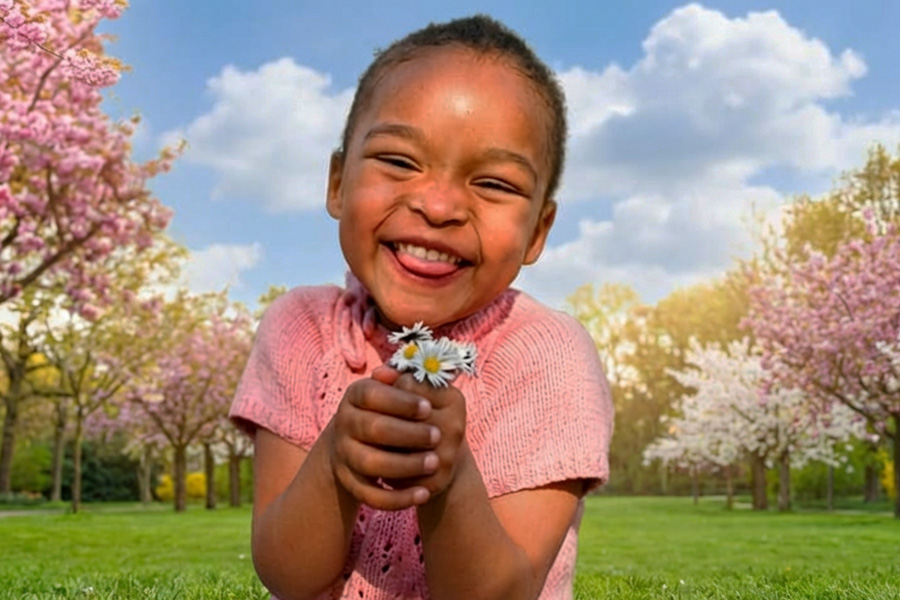
Spring is here, but it takes a while to warm up. If you’ve been counting the days until you can take your little one outside without bundling them in three layers, you’re not alone. After months of cold weather and being cooped up inside, spring offers a great change of scene.
Getting outside is more than a nice break. It’s one of the richest developmental experiences available for children 0–3 years of age, and it’s free! The sights, sounds, and textures your child encounters outside create opportunities for sensory exploration, muscle development, visual growth, and social interaction. All at the same time.
You don’t need a fancy backyard or expensive toys. A walk around the neighborhood, a trip to the playground, or 20 minutes on a blanket in the grass all directly stimulate youthful development.
Why Outdoor Play Matters for Children Ages 0–3
Research consistently shows that children who play outdoors regularly develop stronger bodies, sharper minds, and better emotional regulation than children who spend most of their time inside. The National Association for the Education of Young Children (NAEYC) notes that outdoor play supports early learning in the most important ways: physical, cognitive, social, and emotional. It contributes to better sleep, improved attention, and greater self-control.
The Encyclopedia on Early Childhood Development adds that play in natural outdoor environments supports executive functions. That means thinking processes, including memory, cognitive flexibility, and impulse control. These are the same skills that help your child follow directions, adapt to new situations, and manage frustration as they grow.
And the American Academy of Pediatrics agrees: play is more than a way to spend your child’s time and energy. It enhances brain structure and function, and it builds the kind of problem-solving and social skills that serve kids throughout childhood and even into adulthood.
So what does all this look like in everyday life, when you open the door on a sunny spring day?
Sensory Exploration: A World of New Experiences
From the moment your baby is born, he or she is learning through their senses: touch, sight, sound, smell, and movement. Lots of stimuli exist inside, from toys and music to the smell and the textures of new food. But over time, those become routine. Outside, everything changes.
The feel of grass under bare feet. The sound of birds and passing cars. The warmth of sunshine on skin. The way a breeze moves the leaves on a tree. These aren’t just pleasant experiences. They’re building blocks for how your child’s brain develops. How it processes and organizes a rich world of sensory information.
For infants, these experiences can be as simple as lying on a blanket and feeling the difference between grass and fabric, or watching shadows move across the ground. For toddlers, it’s digging in sand, splashing in puddles, picking up sticks and stones, or running barefoot through the yard.
According to Pathways.org, these kinds of hands-on outdoor activities help children develop the skills they need for more complex tasks later—things like sitting still during a meal, tolerating new tastes in food, or adjusting to busy environments without becoming overwhelmed.
What you can do:
For babies, spread a blanket on the grass and let them feel different textures like grass, leaves, a smooth stone. Point out the sounds around you. For toddlers, set up simple outdoor activities like pouring water between cups, digging in dirt, or collecting natural objects like pinecones and dandelions. Follow your child’s lead and let them explore at their own pace.
Motor Skills: Moving, Climbing, and Getting Stronger
Inside your home, your child has a flat floor, familiar furniture, and predictable spaces. Outside, the world is uneven, unpredictable, and full of things to climb on, crawl over, and navigate around. And that’s exactly what growing bodies need.
- Gross motor skills—the big movements like crawling, walking, climbing, and running. These get a serious workout outdoors. Crawling through grass builds core strength in ways a smooth floor can’t. Walking on an uneven sidewalk challenges balance. Climbing playground steps develops coordination and builds confidence.
- Fine motor skills— the small motions of picking up pebbles, pulling grass, grasping a stick, or scooping sand into a bucket. All these activities strengthen the small muscles in your child’s hands and fingers. These are the same muscles they will eventually use to hold a crayon, button a shirt, or use a spoon.
Experts, including those cited in NAEYC resources such as Nemours Health and Prevention Services, recommend that toddlers get at least 30 minutes of structured (adult-led) physical activity and at least 60 minutes of unstructured (child-led) physical activity every day. Outdoor play is one of the most natural ways to meet both goals.
What you can do:
For babies, try tummy time on a blanket outside. The new sights and sounds give them extra motivation to lift their head and push up on their arms. For toddlers, head to the playground and let them explore age-appropriate equipment like slides, low climbing structures, and swings. At home, roll a ball back and forth on the lawn, stack rocks, or encourage them to walk on different surfaces like grass, gravel, and mulch.
Visual Development: A Bigger, Brighter World
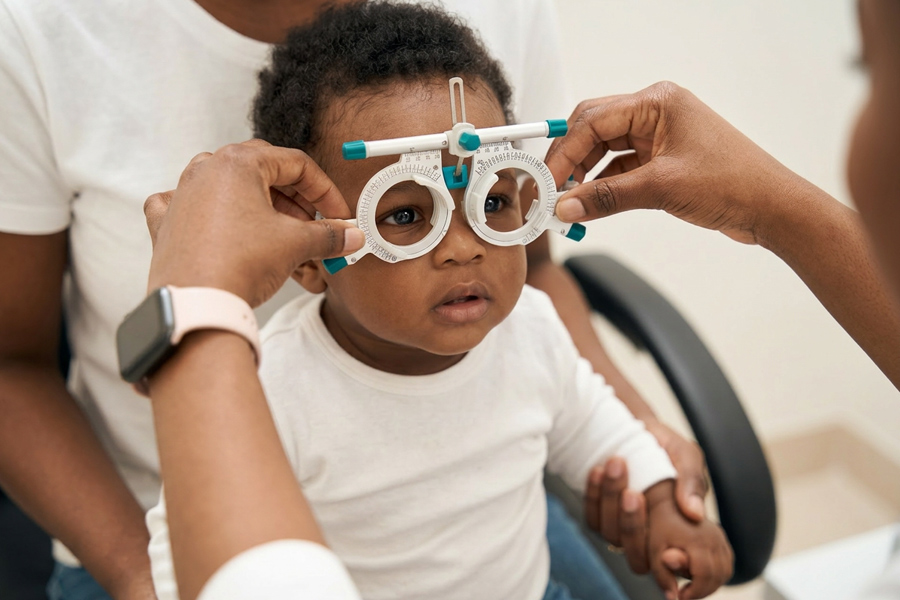
If you’ve been following our blog, you may have read our recent piece on how your child’s vision develops from birth to age 3. Vision is still very much a work in progress during these early years, and outdoor time gives your child’s visual system a unique workout.
Indoors, your child’s eyes focus on objects that are relatively close: toys, books, faces, screens. Outside, the visual landscape changes dramatically. Your child’s eyes have to adjust to natural light, track a bird flying across the sky, shift focus between nearby objects and distant trees, and process a much wider range of colors, contrasts, and movement.
This kind of visual variety is important for developing depth perception, tracking skills, and the ability to process changing visual information. It’s natural development that supports everything from catching a ball to eventually reading a book.
What you can do:
Point out things in the distance: “See that dog over there?” Blow bubbles and watch your child track them with their eyes. For babies, hold them so they can look at the sky or the tops of trees. For toddlers, play simple games like “find the squirrel” or “where did the ball go?” that encourage them to scan and focus in a larger visual space.
Social-Emotional Growth: Learning to Be Around Others
A trip to the park isn’t just physical exercise. It’s one of your child’s first experiences with the wider social world.
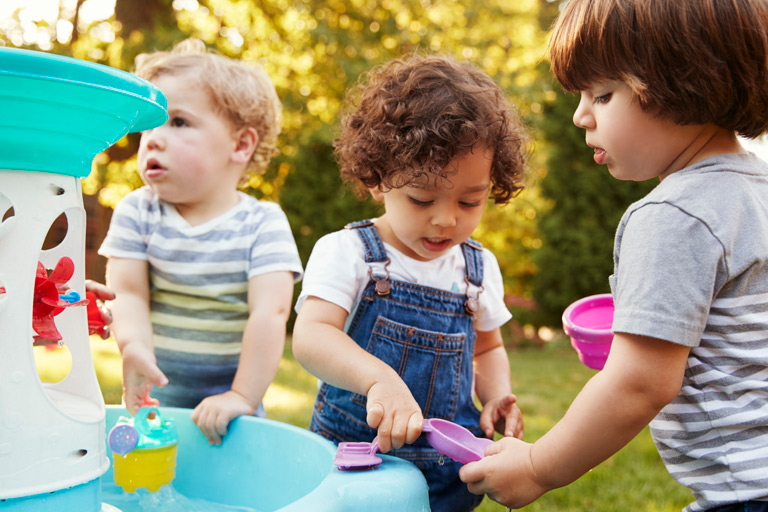
At the playground, your toddler watches other children climb, slide, and dig. He or she may start engaging in parallel play. That means playing alongside other kids without directly interacting. That’s a normal and important stage. Over time, your child begins to share toys, take turns, and even navigate small conflicts. These are foundational social skills that outdoor environments naturally encourage.
Outdoor play also supports emotional regulation. Research from the Encyclopedia on Early Childhood Development suggests that children who spend regular time in outdoor settings show improved self-regulation and lower levels of anxiety.
Open spaces give children room to move, take small risks, and test their limits—which builds confidence and resilience.
And don’t underestimate the value of simply being outside together. Walking with your child, pointing out what you see, and letting them set the pace can help create those special moments that strengthen your bond and give your child a sense of security in the bigger world.
What you can do:
Visit playgrounds and parks where your child can be around other children, even if he or she isn’t ready to play directly with them yet. Narrate what you see: “That girl is going down the slide. Do you want to try?” Give your child time to observe before jumping in. If your toddler has a conflict over a toy or a turn, gently guide them through it rather than solving it for them.
Simple Outdoor Activities by Age
Some of the best outdoor play is the simplest. Here are a few ideas to get you started:
Birth to 6 Months
- Lay your baby on a blanket under a tree and let them watch the leaves move
- Take a stroller walk and talk about what you see
- Hold your baby and let them feel different textures: tree bark, flower petals, warm sand
- Try tummy time on a blanket in the yard for a change of scenery
6 to 12 Months
- Let your baby crawl on grass, dirt, or a playground mat
- Offer safe, large natural objects to explore under close adult supervision: large leaves or very large smooth stones (choose items too big to fit in the mouth). Avoid sticks, which can splinter, and any small objects that could pose a choking hazard.
- Play with water in a small bucket or splash pad
- Blow bubbles for them to watch and reach toward
1 to 2 Years
- Walk on different surfaces: sidewalk, grass, gravel, sand
- Explore a playground with low slides, steps, and platforms
- Dig in sand or dirt with a shovel and bucket
- Collect rocks, leaves, or pinecones in a bag
2 to 3 Years
- Run, jump, and climb on age-appropriate playground equipment
- Play simple games like chase, hide-and-seek, or “I spy”
- Kick or throw a ball back and forth
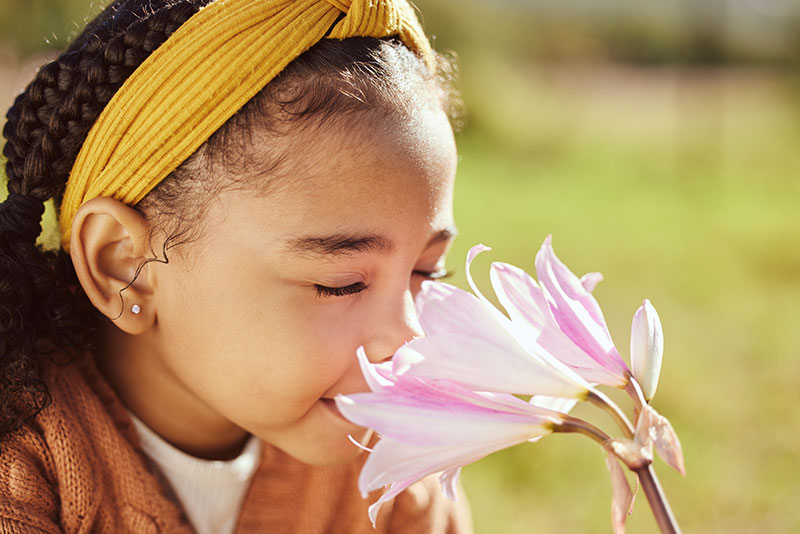
- Explore nature: look at bugs, smell flowers, watch birds, stomp in puddles
Things to Watch for When You’re Outside Together
Here’s something many parents don’t expect: spending time outdoors can actually make certain developmental concerns easier to spot. Inside your home, your child moves through familiar, predictable spaces. Outside, new challenges can reveal things you might not have noticed before.
This isn’t a reason to worry every time you visit the park. But as you enjoy the outdoors together, it’s worth keeping an eye out for a few things:
- Your child has significant difficulty walking on grass, sand, or other uneven surfaces, well beyond what you’d expect for his or her age
- Strong negative reactions to outdoor textures like grass, sand, or water. Beyond mild hesitation, you notice intense distress
- Extreme sensitivity to outdoor sounds (lawnmowers, dogs barking, traffic) that causes crying, covering ears, or wanting to leave immediately
- Noticeable balance or coordination challenges on age-appropriate playground equipment
- Little interest in watching, approaching, or playing near other children
- Difficulty adjusting to bright natural light, excessive squinting, or reluctance to look around in outdoor settings
None of these observations alone means something is wrong. Every child is different and development milestones happen at different rates. Many kids need time to warm up to new environments. But if you notice patterns—or if something just doesn’t feel right over time—trust your instincts. Mentioning what you’ve observed to your pediatrician is always a good idea. Early attention to these kinds of concerns can make a real difference.
Making Outdoor Time Work for Your Family
It’s spring! Yet getting out the door with a baby or toddler isn’t always easy. Between diaper bags, sunscreen, snacks, and nap schedules, a trip to the park can feel like a production. But outdoor play doesn’t have to be complicated or time-consuming to be effective.
Even 15 to 20 minutes of outdoor time can give your child meaningful developmental benefits. A short walk around the block counts! Sitting on the front porch while your toddler explores the steps counts too. Eating a snack outside is another step in the right direction. The goal isn’t perfection—it’s consistency.
A few practical tips:
- Keep it simple. You don’t need special equipment or a destination. Your yard, your sidewalk, and your neighborhood are plenty.
- Follow your child’s interests. If your toddler wants to spend 10 minutes picking up rocks, that’s 10 minutes of fine motor practice, sensory exploration, and focus.
- Don’t worry about dirt. Getting messy is part of the experience. Clothes wash.
- Be present. Put the phone away when you can. Talk to your child about what you see and hear. Your words and attention are the best tools you have.
- Protect your child from the elements. Use sunscreen, hats, and appropriate clothing. Avoid extended time in extreme heat, and always supervise near water.
When to Seek Support
Every child develops at his or her own pace, and there’s a wide range of what’s considered normal. But if you have concerns about your child’s physical development, sensory responses, social engagement, or overall growth, there’s never any harm in asking questions.
Consider reaching out to your pediatrician or early intervention team if you notice:
- Delays in gross motor milestones like crawling, pulling to stand, or walking
- Persistent sensitivity to textures, sounds, or other sensory inputs that interferes with daily activities
- Difficulty with balance, coordination, or navigating physical spaces
- Limited interest in social interaction or playing near other children
- Any loss of skills your child previously had
Trust your instincts. You know your child best. Early support makes a real difference, and getting answers brings peace of mind.
Early Intervention Therapies
If you have questions about your child’s development, TEIS Early Intervention can help. Our specialists listen to your concerns, assess your child’s individual needs, develop a customized treatment plan, and coach you through simple, routine-based solutions to help your child thrive.
Call us at 412-271-8347 or ask your pediatrician about getting an Early Intervention evaluation.
Early intervention evaluations and therapy services are available under the Federal Early Intervention Program for Infants and Toddlers with Disabilities. Before services can begin, an independent evaluation of your child must be completed. To ensure impartiality, one agency provides evaluation services while another offers therapeutic services.
To schedule an evaluation, call 1-800-692-7288 or email help@connectpa.net
 Send to a friend!